

Introduction: More Than Just Child’s Play
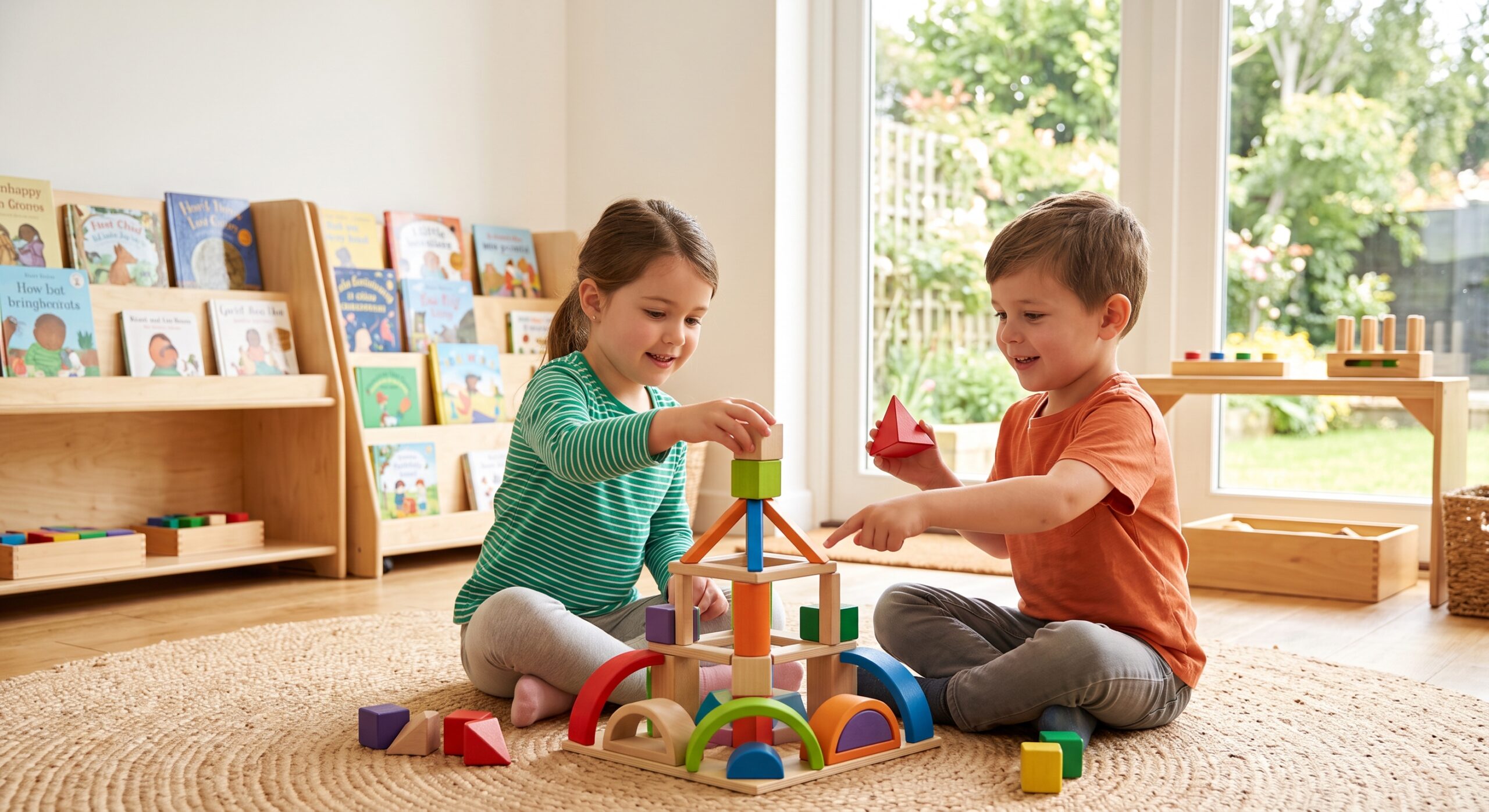
If you have ever sat on the living room floor watching your child meticulously stack one block on top of another, you have witnessed a tiny architect at work. While it might look like a simple game to keep them occupied, building a tower, a castle, or even a wobbly bridge is actually a complex cognitive workout. One of the most significant benefits of this type of play is the development of a critical cognitive skill known as “spatial awareness.”
But what exactly is spatial awareness, and why do pediatricians and educators constantly emphasize its importance? More importantly, how do simple construction toys help your child master it? Let’s dive into the fascinating science behind the blocks.
What Exactly is Spatial Awareness?
In simple terms, spatial awareness is the ability to understand and interact with the physical space around you. It is how we know where our bodies are in relation to other objects, and how different objects relate to one another.
Think about your daily adult life. When you parallel park your car, pack a suitcase so everything fits perfectly, or navigate a crowded grocery store without bumping into carts, you are using spatial awareness. For children, this skill is not innate; it must be learned and practiced. And the very best classroom for this lesson is a playroom floor covered in building toys.
The Science Behind the Blocks: How Building Enhances the Brain
When a child plays with building blocks, magnetic tiles, or interlocking plastic bricks, their brain is doing heavy lifting. Here is exactly how construction toys boost spatial intelligence:
- Mental Rotation: Before a child places a piece on their structure, they have to pick it up, look at it, and imagine how it will fit. This ability to visualize an object from different angles in the mind is called “mental rotation.” It is a foundational skill for advanced mathematics and geometry later in life.
- Understanding Gravity and Balance: Kids learn physics through trial and error. When they build a tower too high and it comes crashing down, they learn about gravity, weight distribution, and structural integrity. The next time, they will instinctively build a wider, more stable base.
- Symmetry and Proportions: Through building, children naturally begin to understand symmetry. They realize that to make a roof stable, both sides of the house need to be the same height. This hands-on experience with proportions is something they cannot easily learn from watching a screen.
The Best Types of Building Toys for Spatial Growth
Not all toys are created equal when it comes to brain development. Open-ended construction toys are the gold standard because they don’t have a single “right” way to be played with.
(Parent tip: If you are looking to upgrade your child’s playroom, check out our diverse collection of Building & Construction Toys designed for all age groups!)
Some of the best options include:
- Classic Wooden Blocks: Perfect for toddlers. They teach the raw basics of balance without the help of interlocking mechanisms.
- Magnetic Tiles: These are fantastic for teaching 2D and 3D shapes. Kids can build flat on the floor and then pull the tiles up to create three-dimensional cubes and pyramids.
- Interlocking Bricks (like LEGOs): Ideal for older children, requiring fine motor precision and complex planning to execute a vision.
How Parents Can Encourage Spatial Play at Home
You can supercharge your child’s learning by being an active participant in their construction time. Here are a few expert ways to guide them without taking over:
- Use Spatial Vocabulary: As you play together, narrate what you are doing using directional and spatial words. Say things like, “Let’s put the red block on top of the blue one,” or “Can you slide the car under the bridge?” or “We need a wider piece here.” Hearing these words in context helps cement their meaning.
- Give Gentle Challenges: Instead of telling them what to build, offer a prompt. You might ask, “Do you think we can build a tower as tall as the sofa?” or “Can you make a house that fits your favorite action figure inside?”
- Let Them Fail: When their tower falls, resist the urge to fix it for them. Instead, ask, “Uh oh! Why do you think it fell over? What should we do differently this time?”
Conclusion: Building a Foundation for the Future
The skills your child learns while playing with construction toys extend far beyond the playroom. Studies have shown that children with strong spatial awareness are more likely to excel in STEM fields (Science, Technology, Engineering, and Mathematics).
So, the next time you accidentally step on a stray building block in the hallway, take a deep breath. Remind yourself that it is just a small price to pay for your child’s growing brain. Encourage them to build higher, dream bigger, and explore the physical world with their own two hands!