

Introduction: Beyond Just Staying Inside the Lines
If you have a pre-schooler in your house, chances are your fridge is covered in colorful, slightly chaotic masterpieces. Handing a child a coloring book and a fresh box of crayons is a time-honored parenting strategy for getting a few minutes of peace and quiet. But did you know that this simple, everyday activity is actually a rigorous physical and cognitive workout for your little one?
While we often view coloring as just a fun creative outlet, pediatric occupational therapists and early childhood educators see it differently. To them, a coloring book is a vital developmental tool. The primary superpower of coloring lies in its ability to dramatically improve a child’s fine motor skills, preparing them for the physical demands of kindergarten and beyond. Let’s explore exactly how these books build those essential tiny muscles.
What Exactly Are Fine Motor Skills?
Before diving into how coloring helps, we need to understand what we are building. “Gross motor skills” involve the large muscle groups used for running, jumping, and climbing. “Fine motor skills,” on the other hand, refer to the coordination of the small muscles in the hands, fingers, and wrists.
These are the muscles we rely on for everyday self-care and academic tasks, such as buttoning a shirt, tying shoelaces, using scissors, and, most importantly, holding a pencil to write. For a pre-schooler, these muscles are still incredibly weak and uncoordinated. They need a “gym” to work out in, and a coloring book is the perfect piece of exercise equipment.
The Mechanics of Coloring: How It Builds the Brain and Hands
When a child sits down with a coloring page, several complex developmental processes are triggered simultaneously:
1. Mastering the Proper “Pencil Grasp”
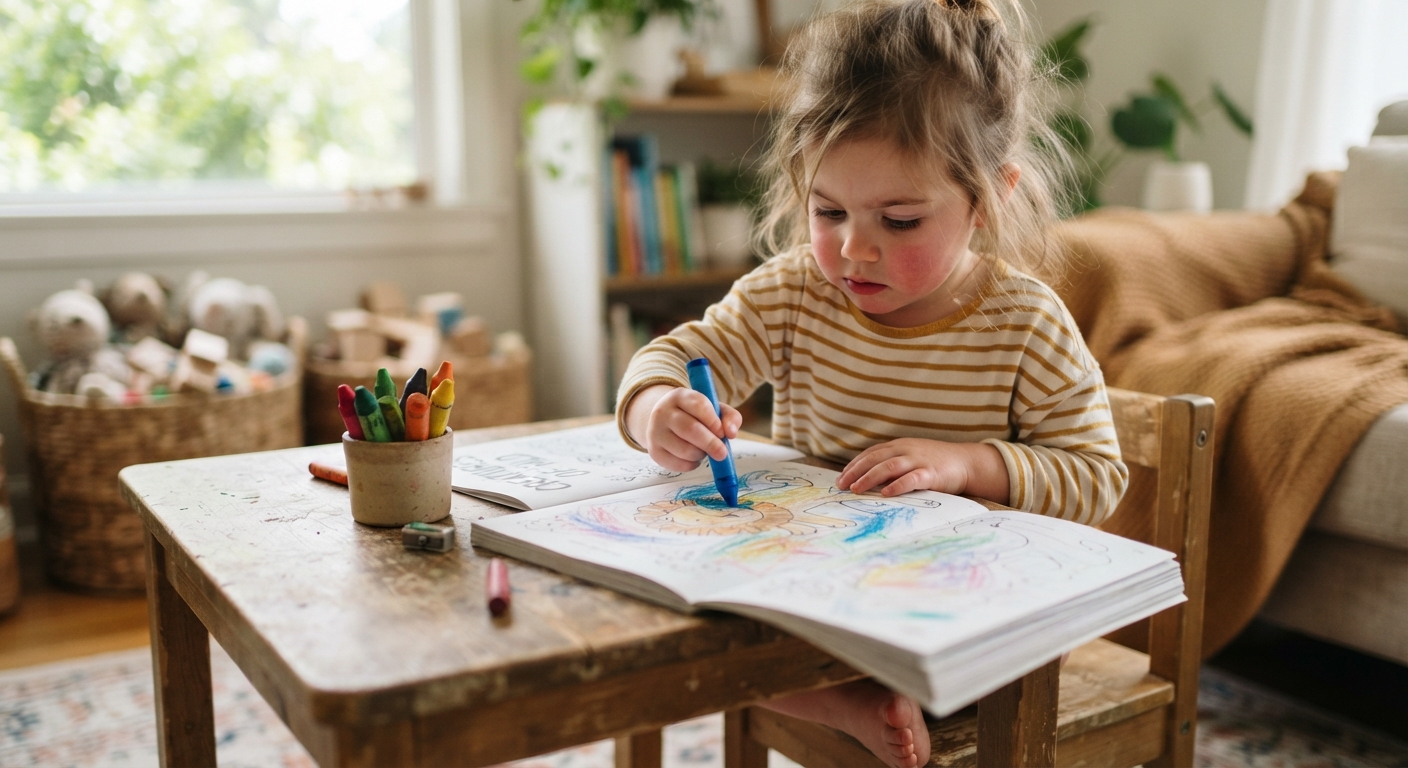
Toddlers naturally grab a crayon with a full closed fist, wrapping all their fingers around it (known as the palmar grasp). But to write comfortably in the future, they need to transition to the “pincer grasp”—holding the writing tool between the thumb and index finger, resting on the middle finger. Coloring naturally encourages this transition. As they try to color smaller areas within a drawing, they instinctively adjust their grip to gain more control, practicing the exact grasp they will need for writing letters.
2. Hand-Eye Coordination and Spatial Awareness
Coloring requires the brain and the hands to communicate constantly. The eyes see the boundary line of a shape (like a circle or a dinosaur), and the brain sends a signal to the hand to stop moving the crayon once it reaches that line. This hand-eye coordination is a highly complex skill. It teaches children spatial awareness—understanding where their hand is on the paper and how much pressure to apply.
3. Building Hand Strength and Endurance
Writing is physically exhausting for a young child. Without proper hand strength, kids will quickly complain that their hands “hurt” when they start learning to write in school. Coloring builds muscular endurance. Pushing a crayon across the rough texture of paper provides natural resistance, strengthening the muscles in the fingers, hands, and wrists. The more they color, the longer they will be able to write without fatigue later on.
The Hidden Psychological Benefits of Coloring
Aside from the physical muscle building, coloring books offer incredible mental benefits that go hand-in-hand with motor skill development:
- Focus and Concentration: Sitting still and dedicating attention to completing a single coloring page teaches young children how to focus on a task from start to finish.
- Patience and Self-Regulation: It takes time to fill in a large picture. Coloring teaches patience and helps children regulate their emotions, serving as a naturally calming, meditative activity.
- Confidence Building: The sense of accomplishment a child feels when they finish coloring a page (even if it is wildly outside the lines!) is a massive boost to their self-esteem.
Choosing the Right Materials for Pre-Schoolers
Not all coloring tools are created equal for tiny hands. When starting out, offer your pre-schooler thick, chunky crayons or markers. These are much easier for weak muscles to grip. As their fine motor skills improve, you can slowly introduce thinner crayons and colored pencils that require a tighter, more precise pincer grasp.
(Parent tip: Looking for the perfect creative tools to help build your child’s skills? Explore our fantastic range of Arts & Crafts supplies, featuring coloring books and child-safe crayons designed specifically for early development!)
Conclusion: A Colorful Path to Kindergarten Readiness
The next time you find crayon shavings on your dining table, try not to sigh. Instead, remember the heavy lifting those little hands are doing. A simple coloring book is not just a way to pass the time; it is a foundational step in your child’s educational journey. By encouraging them to color, you are literally putting the tools for future academic success right into the palms of their hands.