

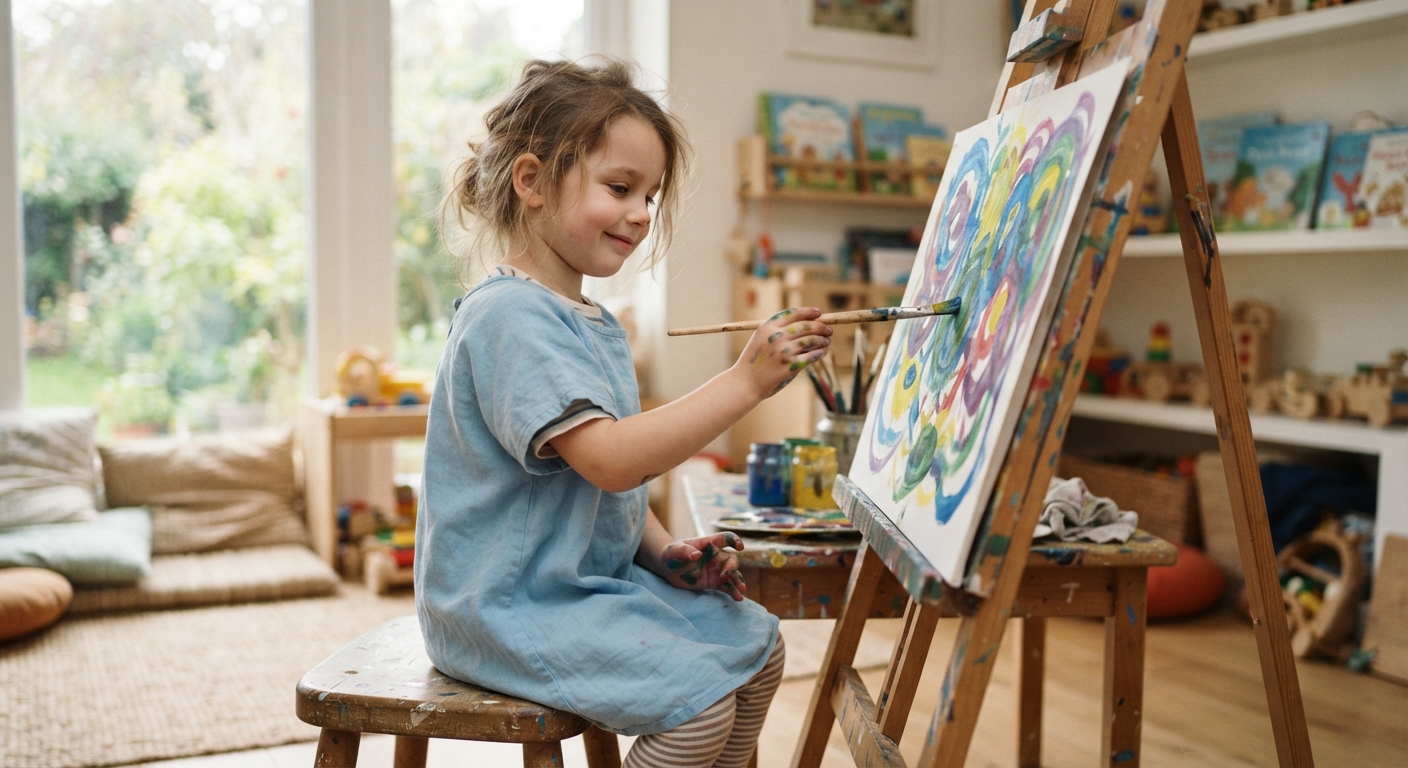
Introduction: Beyond the Messy Hands and Colorful Smudges
When you walk into a room and see your child covered in finger paint, with colorful smudges on their cheeks and a wildly abstract drawing on the table, your first thought might be about the cleanup. However, beneath that beautiful mess, something profound is happening. Drawing and painting are far more than just fun ways to pass an afternoon; they are essential psychological tools.
While we often praise the physical benefits of art—like developing fine motor skills and hand-eye coordination—the mental and emotional benefits are equally, if not more, significant. For a young child, a blank piece of paper is a safe space. It is a canvas where they can process the world around them. Let’s delve into the fascinating psychological benefits of drawing and painting for children, and why fostering this creativity is vital for their mental well-being.
1. A Safe Outlet for Complex Emotions
Children experience a massive range of big emotions—joy, frustration, fear, jealousy, and sadness—but they often lack the complex vocabulary required to articulate how they feel. This gap between feeling and speaking can lead to tantrums and behavioral issues.
Art provides a silent, powerful language. A child who is feeling anxious or angry might grab a dark crayon and press hard into the paper, releasing physical tension. A child who is happy might choose bright yellow paints and wide, sweeping brushstrokes. By transferring their internal feelings onto a physical piece of paper, they are processing their emotions in a healthy, constructive, and entirely safe way. It is a natural form of art therapy.
2. Emotional Regulation and Stress Relief
Have you ever noticed how quiet a room gets when children are deeply engaged in coloring or painting? The repetitive motions of moving a brush across paper or filling in a shape with a crayon have a profoundly calming effect on the nervous system.
This process lowers the heart rate and reduces the production of stress hormones like cortisol. It acts as a form of childhood mindfulness. In our fast-paced, highly stimulating modern world, sitting down to paint offers children a rare moment to slow down, breathe, and center themselves.
3. Building Unshakeable Self-Confidence
In a child’s world, adults make almost all the rules. We tell them when to sleep, what to eat, and how to behave. But in the world of art, the child is the absolute master. They hold the brush, they choose the colors, and they decide what the final outcome will be.
This autonomy is a massive confidence booster. When a child finishes a painting and proudly announces, “Look what I made!” they are experiencing a surge of self-esteem. There is no “right” or “wrong” in a child’s drawing. A sky can be green, and a dog can have six legs. This freedom from perfectionism teaches them to trust their own instincts and value their unique perspective.
4. Fostering Cognitive Flexibility and Problem Solving
Art is rarely a straight line; it is full of happy accidents. What happens when a child accidentally mixes red and green paint and gets a muddy brown? What do they do if their marker slips and draws a line they didn’t intend?
These moments are micro-lessons in cognitive flexibility and problem-solving. Instead of giving up, a child learns to adapt. That accidental line becomes a tree branch. That muddy brown becomes a chocolate mountain. Learning to pivot and turn a “mistake” into something beautiful builds psychological resilience that they will carry into adulthood.
How Parents Can Support the Psychological Benefits of Art
To maximize these mental health benefits, it is important to create a supportive environment. Here are a few ways parents can encourage healthy artistic expression:
- Focus on the Process, Not the Product: Don’t ask, “What is it?” (which can be discouraging if it doesn’t look like anything specific). Instead, say, “Tell me about your picture!” or “I love how you used so much blue here. How did that make you feel?”
- Provide Open-Ended Materials: Avoid giving them too many strict templates. Blank paper, diverse colors, and different textures allow for true self-expression.
- Create an Accessible Art Station: Make sure art supplies are easily reachable so they can self-soothe by drawing whenever they feel overwhelmed.
(Parent tip: Cultivating a creative environment is easy when you have the right tools. Explore our carefully curated Arts & Crafts collection to find safe, high-quality painting and drawing supplies that your children will love.)
Conclusion: A Canvas for the Mind
By giving your child a box of crayons or a palette of watercolors, you are giving them much more than a toy. You are giving them a voice, a coping mechanism, and a safe harbor for their thoughts. Drawing and painting are essential pillars of a happy, emotionally balanced childhood. So, embrace the messy hands, celebrate the abstract scribbles on the fridge, and watch their beautiful minds bloom on paper.