

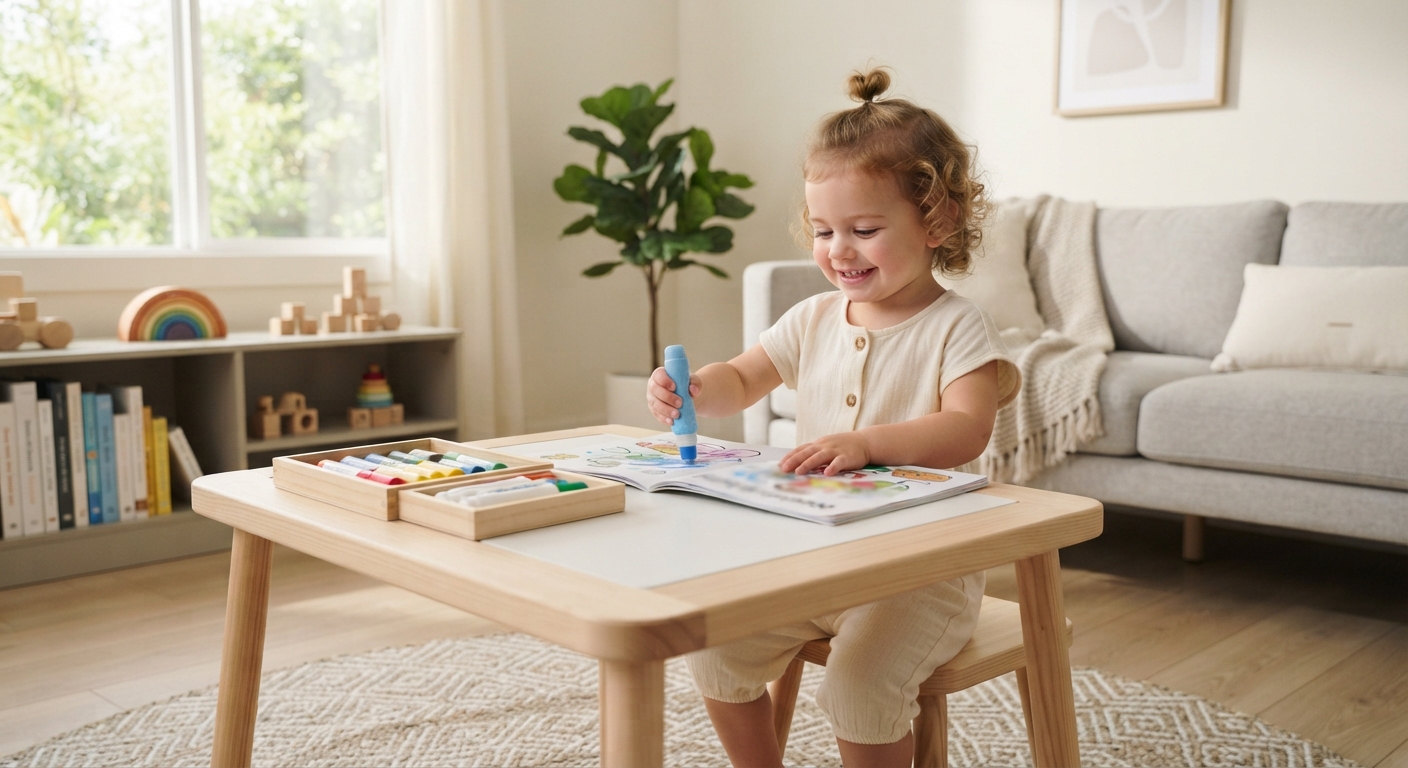
Introduction: Embracing Creativity Without Destroying the Living Room
For most parents of toddlers, the word “crafts” immediately conjures up a terrifying mental image: paint splattered across the beige sofa, marker stains on the hardwood floors, and a child covered head-to-toe in glitter. Because of this fear, many parents naturally avoid setting up art activities, reserving them only for school or outdoor play on warm days.
But as we know, daily artistic expression is crucial for a toddler’s cognitive and fine motor development. So, how do we bridge this gap? Is it actually possible to let a two-year-old unleash their inner Picasso without having to deep-clean the house afterward? The answer is a resounding yes. The secret lies not in hovering over them with a wet wipe, but in the strategic setup of a “Mess-Free Art Station.”
1. Location is Everything: Choose the Right Zone
The first step in setting up a stress-free art station is choosing the right location. You want a designated zone where the child knows art happens, which automatically sets physical boundaries.
- Hard Floors Only: Never set up an art station over a carpet or rug. Kitchens, dining rooms, or uncarpeted playrooms are ideal. If a marker drops, you can easily wipe it up.
- Use a “Splat Mat”: If you only have carpet, invest in a large, waterproof splat mat (or a cheap plastic shower curtain) to place under the small table. This catches stray crayons and accidental spills perfectly.
- Keep it Accessible: The station should be at the toddler’s height. A small child-sized wooden table and chair work best, allowing them to sit comfortably and focus on their work rather than balancing on a tall adult dining chair.
2. Containment is Key: The Magic of Trays
One of the best secrets of Montessori classrooms is the use of trays. Instead of putting art supplies directly on the table where they can roll off, place everything inside a shallow plastic or wooden tray.
If your child is using crayons, the crayons stay in the tray. If they are using a coloring book, the book stays in the tray. This physical boundary creates a psychological boundary for the toddler, teaching them that the activity is contained within that specific square of space.
3. Invest in the Right “Low-Mess” Tools
You do not need liquid paints and loose glitter to create beautiful art. The market is now filled with ingenious, low-mess alternatives that provide the same developmental benefits without the cleanup nightmare.
(Parent tip: Looking to stock your new mess-free zone? Browse our fantastic Arts & Crafts collection for toddler-safe, washable, and low-mess creative supplies that parents love just as much as kids do!)
Here are the best mess-free supplies to stock your station with:
- Water-Reveal Books: These are magic for toddlers. They use a pen filled only with tap water. When the wet tip touches the special pages, vibrant colors appear. Once it dries, the colors disappear, and it can be reused endlessly. Zero mess, zero stains.
- Magnetic Drawing Boards: A classic for a reason. Toddlers can draw, erase, and draw again without a single drop of ink. It is fantastic for practicing pencil grip safely.
- Ultra-Washable Thick Markers and Crayons: If you use traditional supplies, always look for the word “Ultra-Washable.” Test them yourself on a piece of plastic first. Chunky crayons are also less likely to snap and scatter small, hard-to-clean pieces everywhere.
- Solid Paint Sticks: These look and function like glue sticks, but they contain solid tempera paint. They glide smoothly on paper with vibrant colors and dry in less than 90 seconds, eliminating the need for water cups and brushes.
4. Organize with Clear, Sealable Containers
An art station should not have all supplies available at all times. A toddler faced with 50 markers will likely dump them all on the floor. Instead, organize the supplies in clear, plastic bins with secure lids that the toddler cannot open on their own.
Display these bins on a small shelf next to the table. This setup requires the toddler to ask you to open a specific box, giving you control over what they are using and ensuring they only use one type of material at a time. It also teaches them the valuable lesson of putting one activity away before starting another.
5. Set Simple, Firm Rules
Even toddlers can understand basic rules if they are consistently enforced. Establish two simple rules for the art station:
- “Colors stay on the paper.”
- “Art stays at the table.”
If your toddler decides to test the boundaries and color on the table or walk away with a marker, calmly take the marker away and say, “I see you are having trouble keeping the color on the paper. We will put the markers away for now and try again later.” It only takes a few repetitions for them to realize that keeping the area clean means they get to keep playing.
Conclusion: Peace of Mind for Parents, Creative Freedom for Kids
Setting up a mess-free art station takes a little bit of initial planning, but the payoff is immense. By choosing the right location, utilizing trays, and investing in smart, low-mess supplies, you can finally relax. You give your toddler the incredible gift of daily creative freedom, and you give yourself the gift of a clean living room. It is a win-win for everyone.